
450XL: THE STORY OF A FUGITIVE SOUND
2026, Fifteen-channel video installation, colour and B/W, stereo sound, 19'.
Commissioned and produced by Fondazione In Between Art Film for the exhibition Canicula, 2026. Courtesy of the artist; Fondazione In Between Art Film; Maureen Paley, London; mor charpentier, Paris; Sfeir-Semler, Beirut.
LAWRENCE ABU HAMDAN
Lawrence Abu Hamdan (1985, Jordan) is a Lebanese-British independent investigator or “Private Ear.” In 2023, he founded Earshot, the world’s first not-for-profit organisation dedicated to the study of audio for human rights and environmental advocacy. His work has been presented at institutions such as: Munch Museum, Oslo; the Museum of Modern Art, New York; the Biennale Arte 2019, Venice; Sharjah Biennial 14; and the 12th Berlin Biennale. Abu Hamdan’s work has been widely recognised internationally with awards such as the Grand Prize at the Internationale Kurzfilmtage Winterthur (2022), and the Audience Award at the Toronto Biennial (2020), among others. For the 2019 Turner Prize, Abu Hamdan formed a temporary collective with fellow nominated artists Helen Cammock, Oscar Murillo, and Tai Shani in order to receive the award jointly.
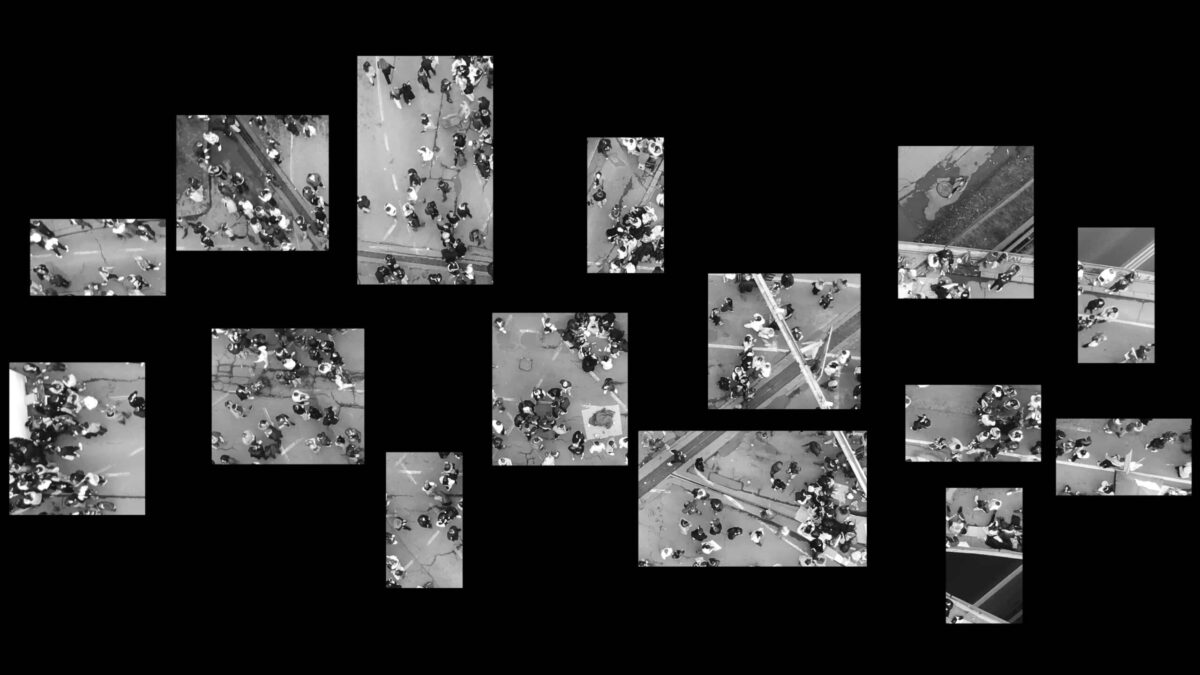
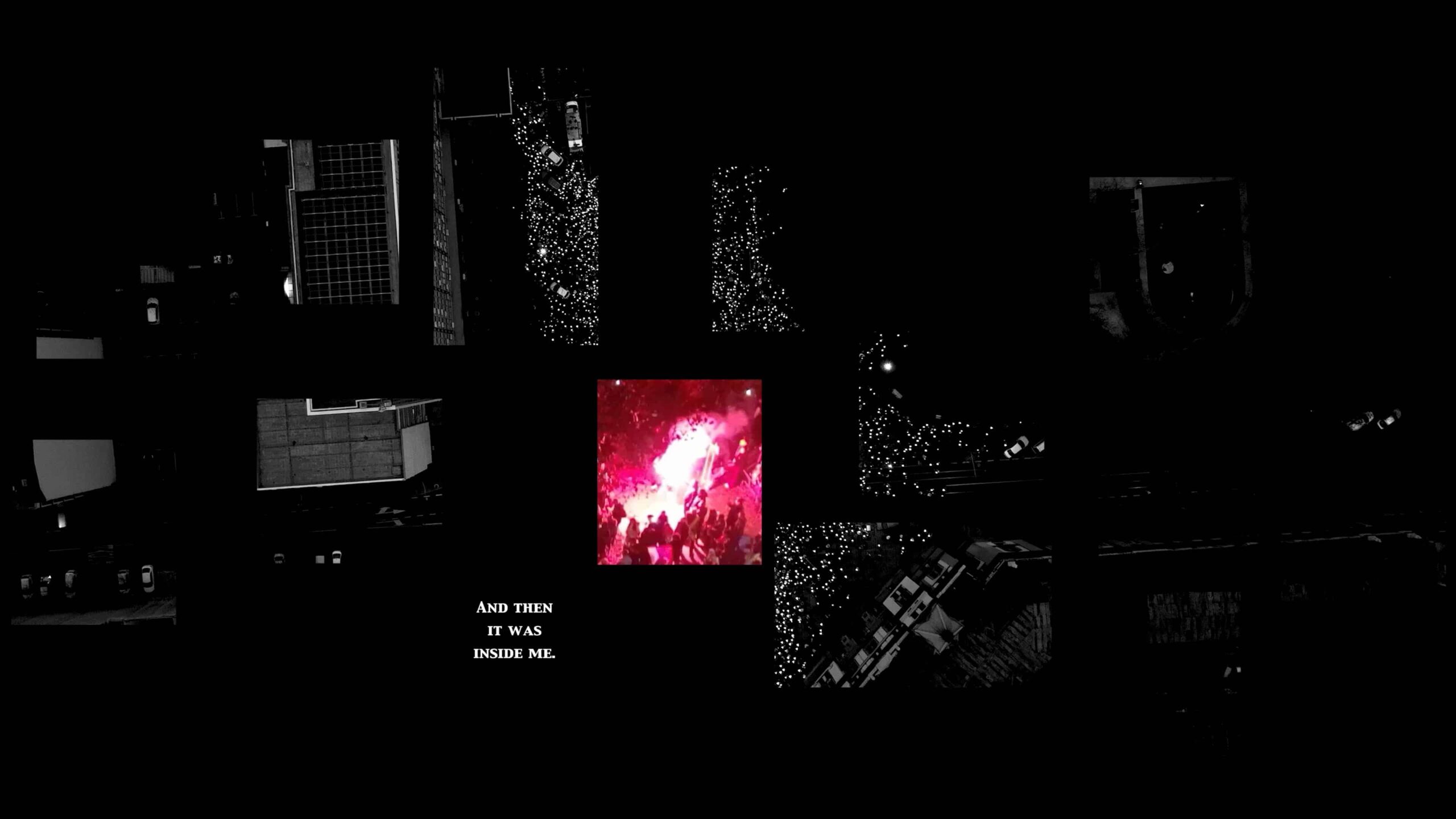
During Serbia’s recent student movement, silent vigils have become an effective mode of resistance against the government. These acts of collective silence are held for 15 minutes: one minute for each person who died in the collapse of a railway station canopy in November 2024. On March 15, 2025, around 300,000 people participated in a silent vigil in Belgrade and, just as it was about to conclude, video recordings show the crowd suddenly dispersing as if fleeing from some invisible yet terrifying force. The following day, the inbox of Earshot – the audio research agency founded and directed by the artist – was flooded with requests from the victims to investigate the event. The team set to work reconstructing the “fugitive sound” at the centre of the attack: a sound whose presence was denied by Serbian and Russian authorities, undetectable to microphones, yet described with striking consistency across more than 3,000 written statements. After conducting 15 in-depth earwitness interviews, Earshot concluded that this was among the first documented uses of a sonic weapon known as an LRAD 450XL. Using this former concert room as a backdrop, the video installation stems from the experience of this emergent weaponry deployed against a peaceful civilian crowd. Across 15 screens, black-and-white intertitles display the verbal yet silent testimonies of the earwitnesses. Their recollections alternate with drone footage taken on the day capturing the run-up to the vigil, with people peacefully gathering along Kralja Milana Boulevard, and moments from the vigil itself, when thousands of flashlights were quietly held up in the darkness in memory of the victims. The only diegetic sound in the work is a one- second clip of the weapon as reconstructed by Earshot. The remainder of the audio is a score composed by James Hoff. In this way, the work follows the logic of a silent film, seeking to return the silence that the LRAD stole from the protestors. Through the fragmented yet coherent composition of this chorus of earwitnesses, the work reflects not only on a weapon designed to undermine solidarity and collectivity, but also on the power of silence as a means of resistance.